Vodka is often spoken about as purity in its simplest form, yet beneath that clarity lies a far more intricate story. Even the most highly distilled vodka is not composed of ethanol alone. Trace amounts of flavour compounds (congeners) remain, carrying subtle layers of flavour, texture, and character. These compounds are not flaws but signatures, and as the spirit rests, they begin to evolve. Some soften, some dissipate, and others interact in ways that gently round the profile, transforming a spirit that may begin sharp and linear into one that is composed, balanced, and quietly refined.
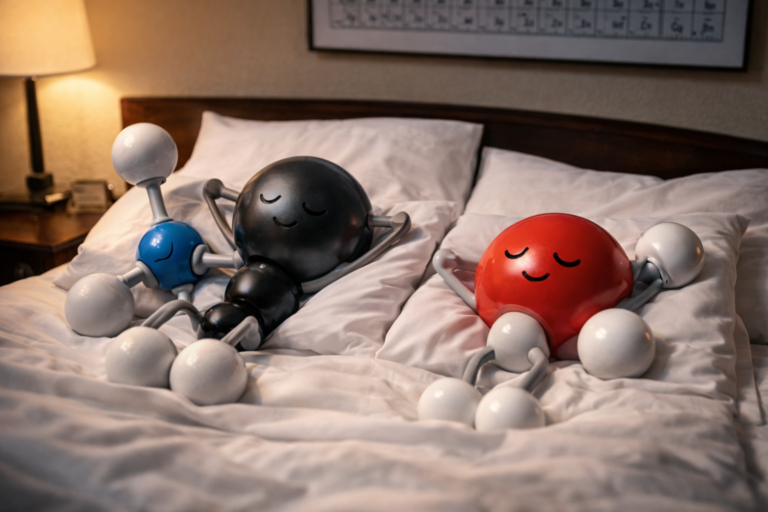
At the same time, vodka is not merely a mixture of alcohol and water drifting freely together. Ethanol, the drinking alcohol (ethanol), behaves in an interesting way, with one end drawn to water and the other avoiding it. This creates a natural tension, causing alcohol and water to form tiny groupings (molecular clusters) rather than a simple blend. These groupings are constantly shifting depending on ratio, purity, and time, and they play a defining role in how a spirit feels on the palate.
It is within this structure that mouthfeel is born. The weight on the tongue (viscosity), the perceived smoothness, and the overall texture of a vodka are shaped by how these molecules organise themselves. At around 40 to 45 percent ABV, alcohol and water find a natural balance, forming a structure that delivers both clarity and body. Move outside this range, and that harmony begins to shift, changing not only the flavour but the very sensation of the spirit.
Those tiny flavour compounds (congeners), though present in small amounts, play a quiet but important role in this structure. As they move and settle during resting, they subtly influence how alcohol and water arrange themselves (molecular structure). This means the spirit is not fixed the moment it leaves the still, but continues to evolve, becoming more integrated and more complete over time.
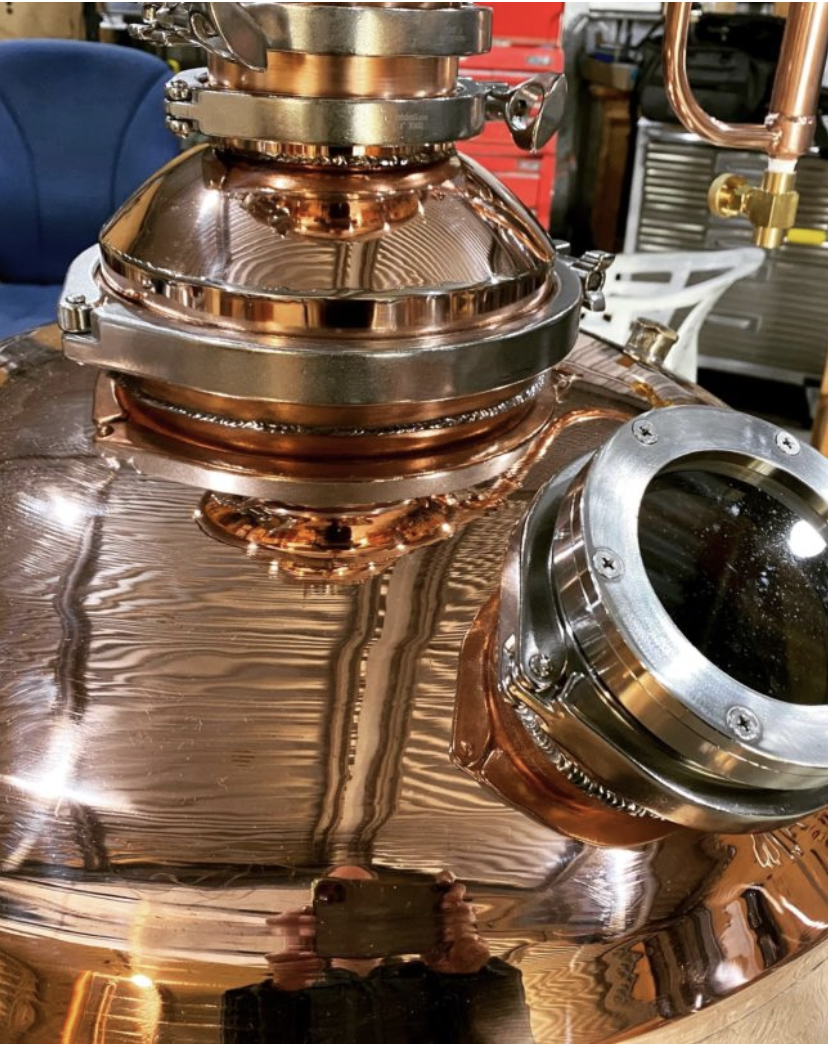
At Conrad Distillery, this is where patience becomes part of the craft. We rest our spirit for 30 days between each distillation, allowing time for these changes to occur naturally. This is why our vodka takes 90 days to make, and our Mediterranean Gin takes 120 days. It is a deliberate decision to prioritise refinement, balance, and texture over speed.
Resting is not simply waiting. It is where the edges soften, where structure aligns, and where a spirit finds its true form. Because true refinement is not forced, it is allowed.