
Seared Lamb Rump Tomato and Vodka Comfit
There’s something deeply satisfying about lamb cooked well. A good rump, seasoned simply with salt and pepper, seared hard to
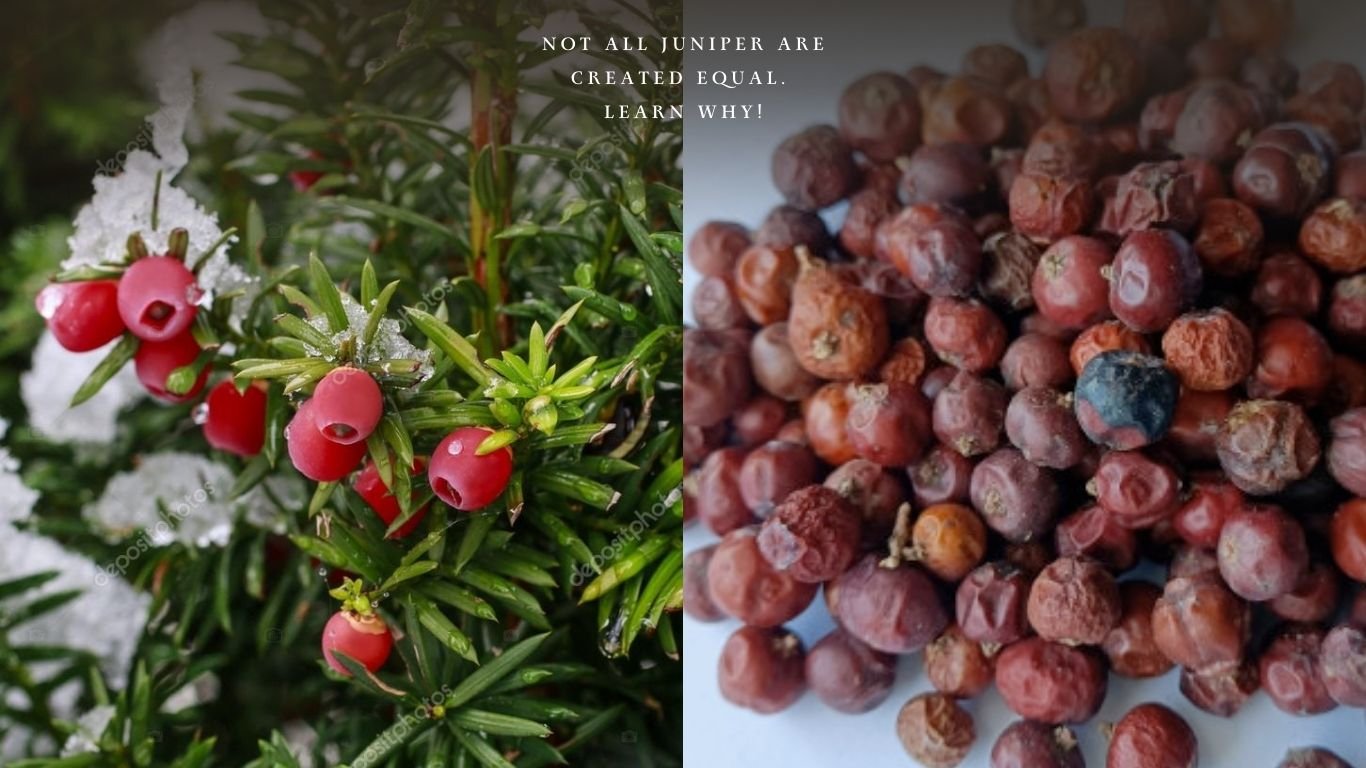
Juniper is not just an ingredient in gin. It is the back bone of all gins.
Strip gin back to its essentials and one truth remains: without juniper, it is not gin. Yet not all juniper behaves the same. Origin, colour, climate, and cultivation practices all shape the final spirit in ways most consumers never consider.
At Conrad Distillery, we use organic red junipers sourced from Bulgaria — and the decision is both sensory and strategic.
Australia has very few juniper plantations compared to Europe. While native juniper species exist here, commercial cultivation is limited. Europe, particularly regions of Bulgaria, Italy, and parts of Eastern Europe, has cultivated juniper for centuries. The climate, soil composition, and generational knowledge create a level of botanical consistency that is difficult to replicate elsewhere.
Bulgaria, in particular, is known for its high-quality organic juniper harvests. The berries develop slowly in cooler climates, concentrating flavour while maintaining structural balance.
For a distiller their individual choose will influence the gin greatly.
Juniper berries are not uniform in colour or profile. Mature “black” junipers are typically darker, more resinous, and intensely pine-driven. They deliver a strong, sharp, almost forest-floor character. Aromatically, they can dominate. On the palate, they lean heavily into bold pineness with a dry, assertive finish.
That style suits certain gins styles like a London Dry. But it is not the style we pursue.
Red junipers, by contrast, offer a softer pine expression. The pineness is present — as it must be — but it integrates rather than overwhelms. Alongside that softer pine backbone come subtle peppery notes and delicate floral tones. The aroma is lifted rather than heavy. The palate feels structured rather than aggressive.
In short: red juniper supports complexity. Black juniper can dominate a gin.
Beyond colour and flavour, cultivation matters.
Organic juniper ensures that what we distill is pure botanical character, not agricultural residue. Juniper is distilled at high proof, meaning anything on the berry is amplified in the spirit. We prefer to work with clean fruit, grown without synthetic inputs, because distillation is a process of concentration. Integrity at the source protects integrity in the glass.
Organic sourcing also aligns with Conrad’s broader sustainability commitments. Responsible ingredient selection is not marketing hype — At Conrad it is operational discipline.
Strong black junipers would push the gin toward a harsher pine profile. Softer red junipers allow a layered, elegant structure. The difference is subtle to some, transformative to others.
When you taste Conrad Mediterranean Gin, the juniper is unmistakable — but it does not dominate. It frames the citrus. It carries the herbaceous notes. It allows the botanicals to breathe.
The result is balance. For us, balance is not optional.
There’s something deeply satisfying about lamb cooked well. A good rump, seasoned simply with salt and pepper, seared hard to
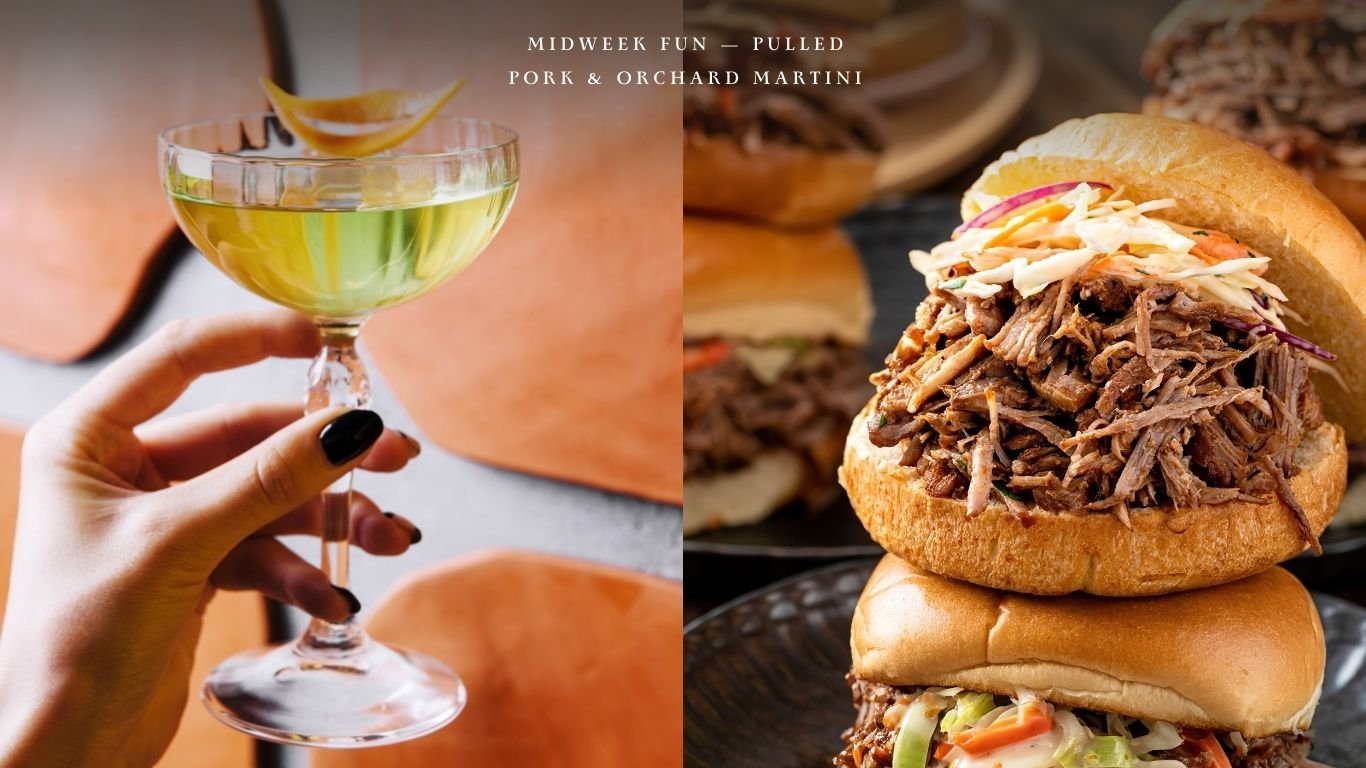
Sunday’s pork roast doesn’t end at the carving board. Discover how leftovers become elevated midweek pulled pork sandwiches — perfectly paired with a crisp Orchard Martini.